
 |
 |
 |
 |
 |
 |
 |
 |
 |

 |
China Spending Billions To Build Up Military Capacity Part One
Moscow (UPI) Jun 23, 2008 Last year, the three nations with the world's biggest military expenses were the United States -- $547 billion, Britain -- $59.7 billion, and the People's Republic of China -- $58.3 billion. The Stockholm International Peace Research Institute -- SIPRI -- published these figures in its 2008 annual report. There are other estimates, but they are not radically different. Many research organizations and the media tend to base their comparison of countries' military might on their defense budgets, although their estimates are often disputed, sometimes by the objects of their studies. Although such comparisons are very relative, they are a point of departure for analyzing the military potentials of different countries. Reports of international institutions that study the strategy and national military potentials, such as the London-based International Institute of Strategic Studies -- IISS -- and the Stockholm International Peace Research Institute, are considered the most accurate. Only recently, the defense budget of the People's Republic of China was a little over $20 billion. What stands behind its leap in military expenses? What war machine will it have in the future? Many countries, above all China's next-door neighbors, are interested in answers to these questions. The growing economy is the main catalyst of China's boosting military potentials. Its industrialized export-oriented economy -- China is increasingly becoming the world's producer of absolutely everything -- from man-made flowers to cars -- requires adequate military protection. Despite successes in the last few decades, China's armed forces are still rather backward, which is another incentive for increasing military spending. Its ground forces are relatively numerous, but it does not have enough modern military hardware; its army air defense system is weak, and its artillery is insufficiently mobile. The same is true of China's air force. Most of its combat aircraft are copies of Soviet war planes of the 1950s. The number of modern aircraft is negligible. China's airlift force is also weak. It does not have enough medium and heavy military transport aircraft. Moreover, China's industry is not developed enough to produce modern aircraft independently. It cannot manufacture a number of important aggregates at the level of the leading aircraft-building powers. Thus, its engines for combat aircraft are still below their Western and Russian counterparts in economic fuel consumption and overhaul period. In order to close the gap, the People's Republic of China will have to make considerable investments, primarily to modernize its industry. Next: Why China's navy remains weak and backward. (Ilya Kramnik is a military commentator for the RIA Novosti news agency. This article is reprinted by permission of the RIA Novosti news agency. The opinions expressed in this article are the author's and do not necessarily represent those of the RIA Novosti news agency.) (United Press International's "Outside View" commentaries are written by outside contributors who specialize in a variety of important issues. The views expressed do not necessarily reflect those of United Press International. In the interests of creating an open forum, original submissions are invited.) Related Links The latest in Military Technology for the 21st century at SpaceWar.com
 Lockheed Martin EQ-36 Counterfire Target Acquisition Radar Completes CDR
 Syracuse, NY (SPX) Jul 02, 2008
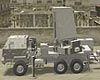
Lockheed Martin recently completed a successful Critical Design Review (CDR) for the Enhanced AN/TPQ-36 counter-fire target acquisition (EQ-36) radar. The completion of this final design step, on schedule, clears the way for the program to move into an initial production phase for five radar systems. |
|
|

| The content herein, unless otherwise known to be public domain, are Copyright Space.TV Corporation. AFP and UPI Wire Stories are copyright Agence France-Presse and United Press International. ESA Portal Reports are copyright European Space Agency. All NASA sourced material is public domain. Additional copyrights may apply in whole or part to other bona fide parties. Advertising does not imply endorsement, agreement or approval of any opinions, statements or information provided by Space.TV Corp on any Web page published or hosted by Space.TV Corp. Privacy Statement |

