 |
 |
 |
 |
 |
 |
 |
 |
 |

 |
Successful Design Review And Engine Test Bring Boeing X-51A Closer To Flight
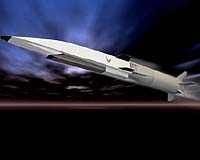
St. Louis MO (SPX) Jun 04, 2007 Boeing's X-51A WaveRider Scramjet Engine Demonstrator recently completed a Critical Design Review (CDR) and fired its engine for the first time -- two major program milestones necessary for first flight. The X-51A program, managed by the Air Force Research Laboratory Propulsion Directorate, is a consortium of the U.S. Air Force, DARPA, NASA, Boeing and Pratt and Whitney Rocketdyne to demonstrate hypersonic flight capability. Held last week in West Palm Beach, Fla., the CDR allowed government and industry officials to review and validate the vehicle's design, assembly, integration and flight test plan. The review is a critical part of the program where specifications are verified to indicate that the vehicle's design has matured to its requirements. Procurements, manufacturing and assembly processes also are established. During the successful firing of the Pratt and Whitney X-1 demonstrator engine, test engineers used a Full Authority Digital Engine Controller to simulate flight conditions at Mach 5 air speed. Test of the hydrocarbon-fueled scramjet engine also demonstrated a closed-loop thermal management system that cools engine hardware and regulates fuel for the engine's combustor. The X-1 is the first of two ground test engines proposed for the program. The successful completion of the CDR and X-1 ground demonstration indicates that the X-51A program is on track to proceed with its first flight tests in 2009. "The CDR and engine test are key validation points for the X-51A program," said George Muellner, president of Boeing Advanced Systems. "The X-51A is a remarkable system that will answer many questions necessary for the development of future hypersonic propulsion vehicles that can be used for delivering payloads to space as well as for atmospheric flight applications." "These successes are critical for the development of the X-51A," said Charlie Brink, U.S. Air Force Research Laboratory X-51A program manager. "It also marks the first time that a scramjet engine was tested in its simulated 'full flight' propulsion configuration -- the Boeing-designed full vehicle fore-body inlet and nozzle." The X-51A ground test program is being conducted at NASA's Langley Research Center in Hampton, Va., and includes four planned test flights. Future tests will verify engine performance and operability across the X-51A flight envelope and further characterize the closed-loop thermal management system. Next, the X-51A team will develop a pre-first flight risk assessment that includes finalizing schedules and addressing remaining procurements, manufacturing, assembly and flight test planning. When completed and flown, the X-51A will demonstrate scaleable scramjet engine propulsion technology, high temperature materials, airframe/engine integration and other key technologies within the hypersonic Mach 4.5 to 6.5 range. The X-51A will set the foundation for several hypersonic applications including access to space. Work for the Boeing X-51A WaveRider is being performed by Boeing Advanced Network and Space Systems in Huntington Beach, Calif. Related Links Integrated Defense Systems Air Force Research Laboratory Propulsion Directorate Rocket Science News at Space-Travel.Com
 ATK Conducts Successful Test Firing Of Space Shuttle Reusable Solid Rocket Motor
 Promontory UT (SPX) May 28, 2007
Alliant Techsystems conducted Thursday May 24, a successful test firing of NASA's Reusable Solid Rocket Motor (RSRM) as part of continuous testing to improve performance and ensure safety of the Space Shuttle, which also transfers improvements into the shuttle-derived first-stage of the Ares I crew launch vehicle. |
|
|

| The content herein, unless otherwise known to be public domain, are Copyright Space.TV Corporation. AFP and UPI Wire Stories are copyright Agence France-Presse and United Press International. ESA Portal Reports are copyright European Space Agency. All NASA sourced material is public domain. Additional copyrights may apply in whole or part to other bona fide parties. Advertising does not imply endorsement, agreement or approval of any opinions, statements or information provided by Space.TV Corp on any Web page published or hosted by Space.TV Corp. Privacy Statement |