SPACE TRAVEL SPACE DAILY SPACE WAR TERRA DAILY MARS DAILY SPACE MART GPS DAILY ENERGY DAILY
  Space Travel News  
Get Our Free Newsletters Via Email
  
Search All Our Sites at SpaceBank
Lockheed Martin-Built Sirius 4 Launched Successfully From Baikonur Cosmodrome

"SIRIUS 4 is the 16th Lockheed Martin-built A2100 series spacecraft designed, built and launched for SES companies," said LMCSS Vice-President and General Manager Marshall Byrd. "This is a testament to the long term commitment to mission success and the tremendous teamwork of SES and Lockheed Martin. Congratulations to all on a great job."
by Staff Writers
Baikonur, Kazakhstan (SPX) Nov 20, 2007
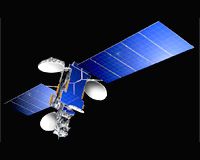
The SIRIUS 4 communications satellite, designed and built by Lockheed Martin for SES SIRIUS, was successfully launched today from the Baikonur Cosmodrome in the Republic of Kazakhstan. Liftoff occurred at 4:39 a.m. (5:39 p.m. EST on Nov. 17) aboard a Proton/Breeze M launch vehicle provided by International Launch Services (ILS). Initial contact with the satellite was confirmed at 3:58 a.m. EST from the Lockheed Martin satellite tracking station in Uralla, Australia.

Built by Lockheed Martin Commercial Space Systems SIRIUS 4 marks the 35th A2100 spacecraft designed and built by Lockheed Martin. The spacecraft will be located at orbital location 5 degrees East and is expected to provide more than 15 years of service.

Based on Lockheed Martin's A2100AX platform, SIRIUS 4 will provide distribution of direct-to-home broadcast and interactive services across Scandinavia, Europe and Africa. SIRIUS 4 features 46 active Ku-band high-power transponders in the BSS and FSS frequency band.

In addition, it is equipped with an active Ka-band transponder for interactive applications in the Nordic and Baltic regions. The spacecraft is equipped with a sub-Sahara African beam to complement existing coverage of Africa, which is accomplished using six additional active Ku-band FSS transponders. Additionally, there is an interconnect payload that connects Africa and Europe with a second Ka-band transponder.

"SIRIUS 4 is the 16th Lockheed Martin-built A2100 series spacecraft designed, built and launched for SES companies," said LMCSS Vice-President and General Manager Marshall Byrd. "This is a testament to the long term commitment to mission success and the tremendous teamwork of SES and Lockheed Martin. Congratulations to all on a great job."

Lockheed Martin is currently building AMC-14 for SES AMERICOM, which is scheduled to be launched in the first quarter of 2008. Lockheed Martin successfully launched ASTRA-1L this year for SES ASTRA.

"We are very proud and satisfied that the SIRIUS 4 mission has been a success," said Hakan Sjodin, Managing Director of SES SIRIUS. "SIRIUS 4 will benefit our customers and extend our coverage and service in Eastern Europe. The success of the SIRIUS 4 mission is a milestone in our company's history, and we would like to underline the very good cooperation with our launch partners, International Launch Services and Lockheed Martin Commercial Space Systems."

The Lockheed Martin A2100 geosynchronous spacecraft series is designed to meet a wide variety of telecommunications needs including Ka-band broadband and broadcast services, fixed satellite services in C-band and Ku-band, high-power direct broadcast services using the Ku-band frequency spectrum and mobile satellite services using UHF, L-band, and S-band payloads. The A2100's modular design features a reduction in parts, simplified construction, increased on-orbit reliability and reduced weight and cost.

The A2100 spacecraft's design accommodates a large range of communication payloads. This design modularity also enables the A2100 spacecraft to be configured for missions other than communication. The A2100 design is currently being adapted for geostationary earth orbit (GEO)-based earth observing missions and is currently the baselined platform for Lockheed Martin's Geostationary Operational Environmental Satellite Series-R (GOES-R) proposal.

The A2100 also serves as the platform for critical government communications programs including Advanced Extremely High Frequency and Mobile User Objective System and is the foundation for Lockheed Martin's Transformational Satellite Communications System (TSAT) offering.
Community
Email This Article
Comment On This Article

Related Links
Launch Pad at Space-Travel.com


Ground Broken For New Test Launch Pad
Las Cruces NM (SPX) Nov 19, 2007
A new launch pad being built in New Mexico will host the first escape systems tests for NASA's Orion capsule, the successor to the space shuttle. The new pad, based at the U.S. Army's White Sands Missile Range near Las Cruces, will be the site for a series of tests for the Orion's launch abort system -- a rocket-powered escape tower that will pull a manned capsule free from its booster if an emergency occurs, Space.com reported Wednesday.


Memory Foam Mattress Review

Newsletters :: SpaceDaily Express :: SpaceWar Express :: TerraDaily Express :: Energy Daily
XML Feeds :: Space News :: Earth News :: War News :: Solar Energy News
  • Northrop Grumman Demonstrates New Rocket Engine Design Using Oxygen And Methane Propellants
  • Indigenous Cryogenic Stage Successfully Qualified
  • Groundbreaking Signals Start Of NASA Constellation Flight Tests
  • SpaceX Completes Development Of Merlin Regeneratively Cooled Rocket Engine

  • Lockheed Martin-Built Sirius 4 Launched Successfully From Baikonur Cosmodrome
  • Ground Broken For New Test Launch Pad
  • Sea Launch Resumes Countdown for Thuraya-3 Launch
  • First Soyuz Launch From Kourou Set For 2009

  • US Lawmakers Grill Space Agency On Plans For Shuttle Retirement
  • Atlantis At The Pad
  • Shuttle returns safely to Earth after complex mission
  • NASA's Space Shuttle Atlantis To Move To Launch Pad Saturday

  • Crew Moves Harmony To Front Of Space Station
  • PMA-2 Move Readies Station For Harmony Relocation
  • Expedition 16 Completes First Spacewalk
  • Russia plans more ISS modules

  • Brazil to invest 28 bln dollars in science and technology: Lula
  • SPACEHAB Supporting Key Milestones Under NASA Space Act Agreement
  • Orbital Outfitters Debuts IS3C - First-Ever Fully Functional Commercial Pressure Spacesuit
  • Europe's comet-chasing probe completes key flyby

  • China Completes Enclosure Of Land For Fourth Satellite Launch Center
  • China aiming to replace foreign satellites: report
  • China launches remote sensing satellite
  • China Launches New Remote Sensing Satellite

  • Proton Rocket To Launch Glonass Satellites Friday
  • Can A Robot Find A Rock. Interview With David Wettergreen: Part IV
  • QinetiQ Establishes Service And Support Centre For Talon Robots In Australia
  • UCSD Researchers Give Computers Common Sense

  • Mars Express Creates First Global Map Of Martian Ionosphere
  • Rover Finds Way To Brush Rock Surfaces Despite Setbacks
  • Opportunity's Rock Abrasion Tool Shows Anomalous Behavior
  • Spirit Continues Drive As Power Levels Decline

  • The content herein, unless otherwise known to be public domain, are Copyright 1995-2006 - SpaceDaily.AFP and UPI Wire Stories are copyright Agence France-Presse and United Press International. ESA PortalReports are copyright European Space Agency. All NASA sourced material is public domain. Additionalcopyrights may apply in whole or part to other bona fide parties. Advertising does not imply endorsement,agreement or approval of any opinions, statements or information provided by SpaceDaily on any Web page published or hosted by SpaceDaily. Privacy Statement