 |
 |
 |
 |
 |
 |
 |
 |
 |

 |
All Systems Go For Russian Cockroach-Carrying Bio-Satellite
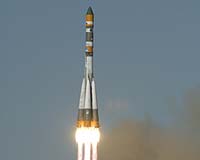
Baikonur Space Center (RIA Novosti) Sep 18, 2007 The first experiments are due to begin on board the Foton-M bio-satellite, launched Friday on a Soyuz rocket from the Baikonur space center, the head of the project told journalists. The cockroach-carrying bio-satellite, whose passengers also includes snails, lizards, butterflies and gerbils, took off at 3 p.m. Moscow time (11 a.m. GMT). The satellite, and its on-board equipment, is functioning normally, and artificial day and night cycles have already been put into motion for the gerbils, the spokesman told journalists. The bio-satellite is to make a twelve-day flight, with its return to Earth planned for 4:33 a.m. Moscow time (1:33 a.m. GMT) on September 26. The flight is part of an ongoing experiment into the effects of space flight by the Institute of Biomedical Problems (IBMP). The creatures are sealed in special containers, and a video camera is to film them during the flight, a Moscow-based IBMP spokesman said earlier. The Foton launch went ahead despite the September 6 crash of a Proton-M rocket which came down shortly after lift off from Baikonur. "The Proton is a heavy rocket, which uses highly toxic heptyl as fuel, whereas the Soyuz is a medium-class booster using environmentally friendly fuel - kerosene and liquid oxygen," a Federal Space Agency spokesman said on Tuesday, adding that the two rockets are also produced by different plants - in Moscow and in Samara, respectively. Related Links Space Tourism, Space Transport and Space Exploration News
 NASA's 'space economy' reaps windfall for humanity: chief
 Washington (AFP) Sept 17, 2007
NASA is at the thriving heart of a 180-billion-dollar "space economy" that benefits life on Earth, the head of the much-maligned US agency said Monday ahead of its 50th birthday. |
|
|

| The content herein, unless otherwise known to be public domain, are Copyright Space.TV Corporation. AFP and UPI Wire Stories are copyright Agence France-Presse and United Press International. ESA Portal Reports are copyright European Space Agency. All NASA sourced material is public domain. Additional copyrights may apply in whole or part to other bona fide parties. Advertising does not imply endorsement, agreement or approval of any opinions, statements or information provided by Space.TV Corp on any Web page published or hosted by Space.TV Corp. Privacy Statement |