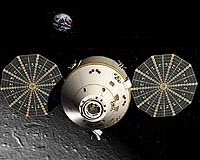
illustration only
illustration only |
Successful completion of the PDR stage allows the team to enter Orion's critical design review (CDR) phase, a vital milestone that must be met before hardware manufacturing begins.
During the review process, detailed components and subsystems of the vehicle design are assessed to ensure the overall system will meet all NASA requirements for safe and reliable flight.
"We were very pleased with the positive feedback we received from NASA leadership, particularly in regards to the tremendous progress we have made in crew and vehicle safety enhancements and our manufacturing preparedness," said Cleon Lacefield, Lockheed Martin vice president and Orion program manager.
"As we move from PDR to CDR, we will continue to enhance the vehicle's safety and life support system designs to ensure we move forward to build the safest and most reliable spacecraft possible."
Other significant milestones the Orion program achieved this year included renovation and certification of the Operations and Checkout Facility at Kennedy Space Center in Florida, Orion ground test article fabrication at the Michoud Assembly Facility in New Orleans, final delivery of the launch abort system's abort and jettison motors, and a series of component and subsystem tests at facilities across the country.
The next major milestone will be the inaugural flight test for Orion's launch abort system, called Pad Abort 1, which will take place at White Sands Missile Range in New Mexico early next year.
Several flight tests are scheduled over the next few years, leading up to Orion's first crewed flight to the International Space Station in 2015.
Share This Article With Planet Earth
 del.icio.us del.icio.us |
 Digg Digg |
 Reddit Reddit |
 YahooMyWeb YahooMyWeb |
 Google Google |
 Facebook Facebook |

 Launchspace Solar System Exploration Architecture: Reader Responses
| The content herein, unless otherwise known to be public domain, are Copyright 1995-2009 - SpaceDaily. AFP and UPI Wire Stories are copyright Agence France-Presse and United Press International. ESA Portal Reports are copyright European Space Agency. All NASA sourced material is public domain. Additional copyrights may apply in whole or part to other bona fide parties. Advertising does not imply endorsement,agreement or approval of any opinions, statements or information provided by SpaceDaily on any Web page published or hosted by SpaceDaily. Privacy Statement |