 |
 |
 |
 |
 |
 |
 |
 |
 |

 |
Radar reveals vast medieval Cambodian city: study
Chicago (AFP) Aug 13, 2007 Archaeologists using radar imagery have shown that an ancient Cambodian settlement centered on the celebrated temple of Angkor Wat was far more extensive than previously thought, a study released Monday said. The medieval settlement surrounding Angkor, the one-time capital of the illustrious Khmer empire which flourished between the ninth and 14th centuries, covered a 3,000 square kilometer area (1,158 square miles). The urban complex was at least three times larger than archaeologists had previously suspected and easily the largest pre-industrial urban area of its kind, eclipsing comparable developments such as Tikal a Classic Maya "city" in Guatemala. Archaeologists have been trying to map the boundaries of the sprawling agricultural environs of Angkor in Siem Reap province since the 1950s, but the ancient remains have been subsumed by modern residential and agricultural developments, complicating the task. So in 2000, a group of archaeologists from Australia, France and Cambodia who were working on the project turned to the US space agency NASA for help. The agency obliged, providing radar images of the terrain that distinguished the contours of the landscape under the surface of the earth, identifying the location of roads, canals and ponds surrounding temples. When the researchers combined the data with aerial photography and ground surveys, they were able to identify several thousand ponds and 74 long-lost temples. The researchers concluded the complex irrigation network that provided the basis for the settlement's rice agricultural extended 20-25 kilometers out from Angkor city, to the north and south to the border of Lake Tonle Sap. The roads and canals, the defining features of the area, demonstrated that the urban settlement extended far beyond the walls of Angkor -- a World Heritage site home to Angkor Wat and other renowned temples. The settlement could have supported a population of up to half a million people, although there were signs that some of the terrain was sparsely populated, said Damian Evans, a graduate student in the archaeology department at Sydney University and author of the paper. The study also yielded clues to support the theory that environmental disaster was the cause of the civilization's collapse in the 14th century, Evans said. "We saw signs that embankments had been breached and of ad hoc repairs to bridges and dams, suggesting that the system became unmanageable over time. "Angkor was extensive enough, and the agricultural exploitation intensive enough, to have created a number of very serious environmental problems," he said. Deforestation, over population, topsoil erosion and degradation with subsequent sedimentation or flooding could have been disastrous for the medieval population, he said. The paper appears in the Proceedings of the National Academy of Sciences. Related Links Earth Observation News - Suppiliers, Technology and Application
 Satellite Tracking Will Help Answer Questions About Penguin Travels
 Seattle WA (SPX) Aug 08, 2007
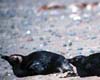
You could understand if a half-dozen Magellanic penguins developed a "big bird is watching" phobia before this month is over, but the surveillance really will be for their own good. University of Washington scientists will attach satellite tracking devices to the backs of six penguins that have been treated at two centers in northern Argentina after their feathers were fouled with oil. The birds will be released into the Atlantic Ocean and their movements traced using satellites and the Internet. |
|
|

| The content herein, unless otherwise known to be public domain, are Copyright Space.TV Corporation. AFP and UPI Wire Stories are copyright Agence France-Presse and United Press International. ESA Portal Reports are copyright European Space Agency. All NASA sourced material is public domain. Additional copyrights may apply in whole or part to other bona fide parties. Advertising does not imply endorsement, agreement or approval of any opinions, statements or information provided by Space.TV Corp on any Web page published or hosted by Space.TV Corp. Privacy Statement |